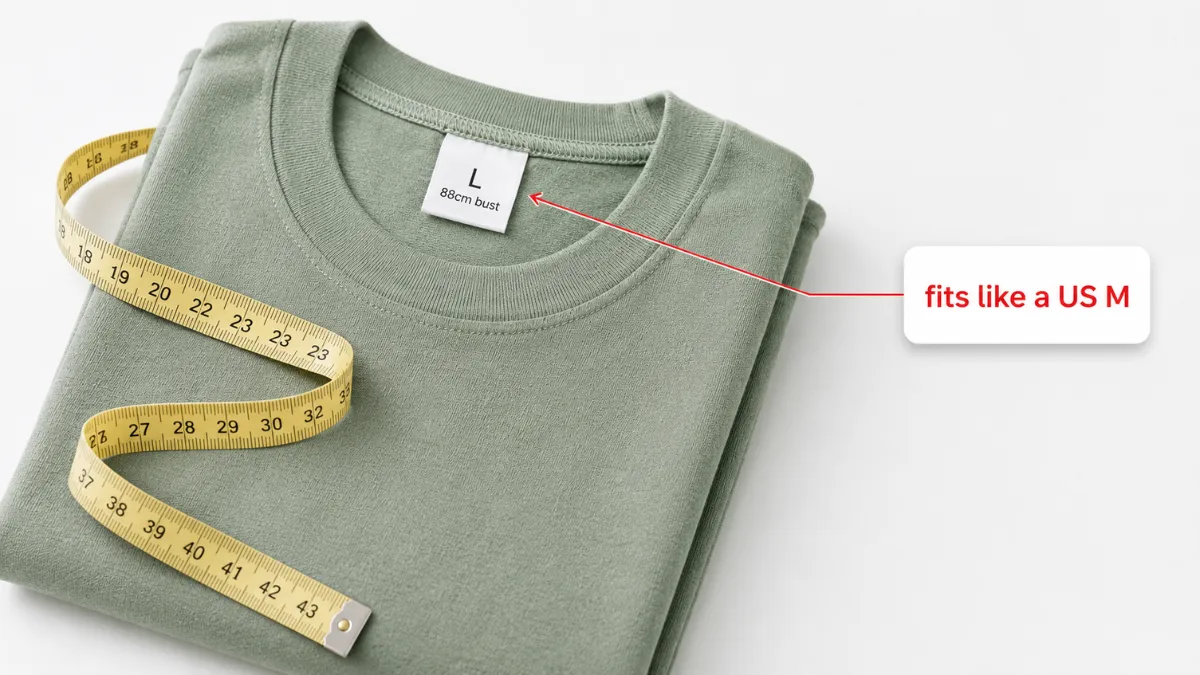
Every clothing dropshipper learns the same lesson, usually the expensive way: the “L” on your AliExpress listing is not the L your customer is wearing. She orders her usual size, waits three weeks, and receives something one to two sizes smaller than she expected. She’s angry, you’re refunding — because sending it back to China costs more than the top did — and your store just earned the review that scares off the next ten buyers.
This guide explains why Asian sizing runs the way it does, why conversion charts mostly don’t work, and the system that actually prevents sizing refunds — the only kind of returns strategy that makes economic sense when your supplier is an ocean away.
Why Asian Sizes Run Smaller (It’s Not a Trick)
Sizing labels are regional conventions, not measurements. An “M” made for the Chinese domestic market is cut for the typical proportions of that market — generally slimmer builds, narrower shoulders, shorter garment lengths — and Western vanity sizing (which has inflated US label sizes for decades) never happened there. Neither label system is “wrong”; they’re just calibrated to different bodies. The result in practice: an Asian-market garment typically fits one to two label sizes smaller than a US/EU garment with the same letter on the tag.
The trap for dropshippers is that this offset isn’t consistent. It varies by factory, by garment type, and by listing — some AliExpress sellers already relabel for export (“US size” listings), some don’t, and some mix both in one catalog. Which leads to the first rule of this whole topic:
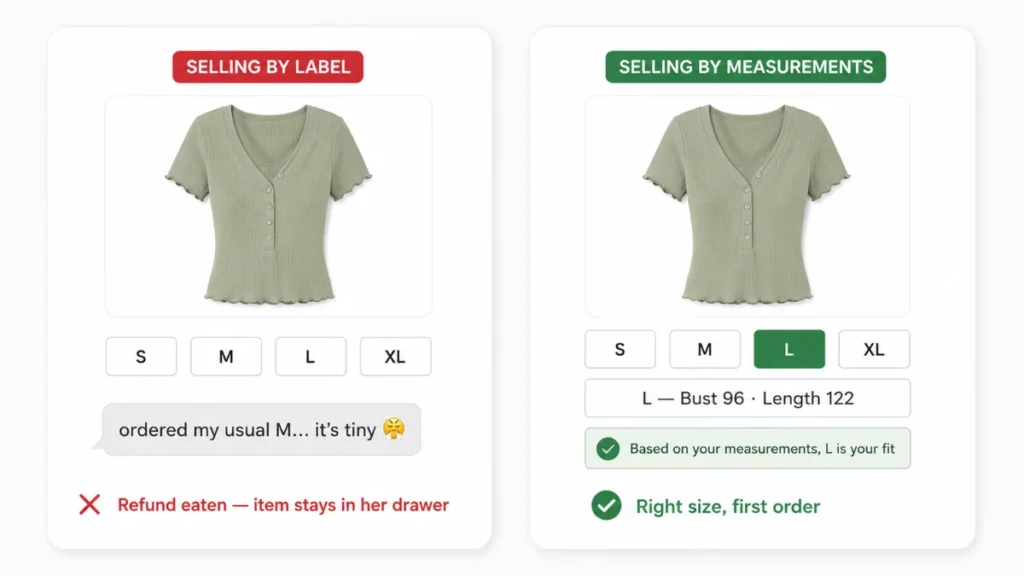
Never sell by the label. Sell by the measurements.
Why Conversion Charts Fail
Search this topic and you’ll find endless “Asian to US size conversion” tables promising that Asian XL = US M. Bookmark none of them. There is no universal conversion, because there is no universal “Asian size” — a factory in Guangzhou and a factory in Hangzhou cut the same nominal size differently, and neither answers to a standards body. A conversion chart that’s right for one supplier’s dresses will be wrong for the same supplier’s outerwear.
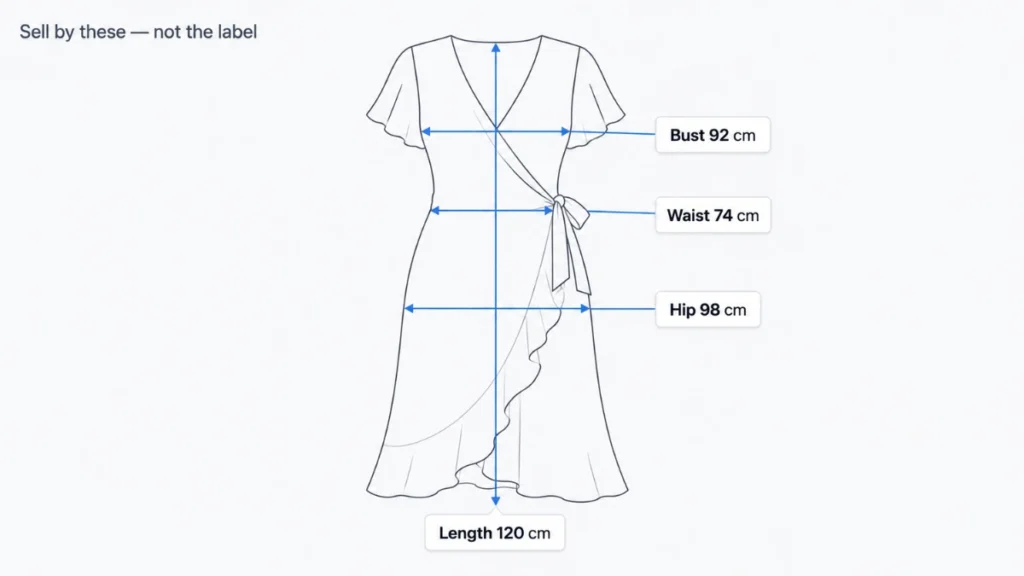
What is reliable: the garment measurement table on most AliExpress listings — actual centimeters for bust, waist, length, and shoulder per size. Those numbers describe the physical garment, no interpretation needed. Your entire sizing system should be built on them.
The System: From Supplier Table to Confident Buyer
Step 1: Get real measurements for every size. Most listings include a cm table; when one doesn’t, message the supplier — factories have spec sheets and usually respond. No measurements at all is a supplier red flag: source elsewhere. For your bestsellers, order one sample and verify the table with a tape measure — ten minutes that protects your ad spend.
Step 2: Publish measurements, not conversions. Your product page should show the real numbers per size — bust, waist, hip, length in cm and inches — not “runs small, size up!” (which buyers ignore or over-correct). Your customer’s tape measure against your published table beats every conversion chart ever written. In WooCommerce, the AnyDress plugin’s size charts hold per-size garment measurements, assign to products in bulk, and support per-product overrides — build one chart per supplier-and-garment-type, not one chart for your whole store, because that’s exactly how the variance runs.
Step 3: Let the fit answer itself. Publishing measurements helps buyers who measure; most don’t. This is where fit tooling earns its keep: with virtual try-on, the shopper uploads a photo and sees the garment on her own body — and when she’s entered her measurements, the system can flag that the M runs tight on her and suggest the L before she orders. The wrong-size order is prevented at the exact moment it would have happened. For cold traffic who’ve never touched your supplier’s sizing — which is every dropshipping customer — this is the difference between guessing and knowing. (Full picture in our returns prevention guide.)
Step 4: Keep your imagery honest about fit. If your product photos show a garment worn loose and flowing but it cuts slim, no measurement table saves you from “looked different” refunds. When you generate your own product imagery — see our guide to dropshipping product photos — keep the rendered fit consistent with the real cut.
A Realistic Example
Say your supplier’s table for a wrap dress reads: M = bust 92cm, length 120cm; L = bust 96cm, length 122cm. Your US customer wears a US M, which for dresses typically means a 95–98cm bust preference with ease. Sold by label, she orders M and gets a dress 3–6cm tighter than she expects. Sold by measurements — or better, with a fit check against her own numbers — she lands on the L (or you relabel your store sizes so your “M” is the supplier’s L, a common and legitimate practice; just keep your published measurements matched to whatever labels you choose).
Does This Apply to Temu, Shein, Alibaba, and CJ Dropshipping?
Yes — the mechanics are identical across Chinese-manufactured clothing, whatever storefront it passes through. Alibaba and CJ Dropshipping listings carry the same per-size cm tables (CJ often includes both Asian and relabeled export sizing — check which one a listing uses before copying it). Temu-sourced goods come from the same factory ecosystem. Shein is the interesting reference point: it built a fast-fashion empire on this exact problem by publishing detailed garment measurements and pushing size guidance hard — your customers already know “check the measurements, Shein runs small” as folk wisdom. Your store should simply do the same thing better, with real measurements plus an actual fitting room.
FAQ: AliExpress and Asian Clothing Sizes
How many sizes smaller do AliExpress clothes run? Typically one to two label sizes versus US/EU expectations — but it varies by factory and garment, which is why the honest answer is “ignore labels, use the listing’s cm measurements.”
Should I tell customers to size up? No — “size up” advice compounds guessing with more guessing. Publish real garment measurements per size, and use fit tools that compare them against the customer’s own measurements.
Can I relabel Asian sizes as US sizes in my store? Yes, and many stores do — sell the supplier’s L as your M if that matches your market’s expectations. Just keep your published measurement chart aligned to your labels, and keep the mapping consistent within each supplier.
What if my supplier’s listing has no measurement table? Ask the supplier directly; factories have spec sheets. If they can’t or won’t provide one, treat it as a quality signal and find another supplier — sizing chaos downstream starts with suppliers who don’t know their own garments.
Do sizing issues really matter if I have a good refund policy? For dropshippers, refunds usually mean eating the full cost — item, shipping, and the ad spend that bought the order. A refund policy is damage control; measurements and fit tools are damage prevention. Prevention is the only version that protects your margin.
Stop refunding the guesswork: add size charts and AI virtual try-on to your store — or, if you sell through Instagram or TikTok, get a hosted storefront with fit built in.