If you are reading this, you already know the basics of running a WooCommerce fashion store. You’ve optimized your checkout page, you use a fast hosting provider, and you have an abandoned cart email sequence set up.
Yet, your conversion rate is still stuck at 2%. Why?
Because in 2026, the psychology of the online shopper has drastically evolved. The new battleground for conversions isn’t about page load speed—it’s about visual validation, interactive dopamine, and micro-personalization.
If you are looking to boost WooCommerce clothing conversions this year, it’s time to abandon the old playbook. Here are five completely unique, advanced strategies to boost your WooCommerce apparel sales.
1. Escape the “Flat-Lay Penalty” in Visual Search (GEO)
Most WooCommerce store owners still think of SEO purely in terms of text. But for fashion e-commerce in 2026, Generative Engine Optimization (GEO) and Google Visual Search (Google Lens) drive the highest-converting traffic.
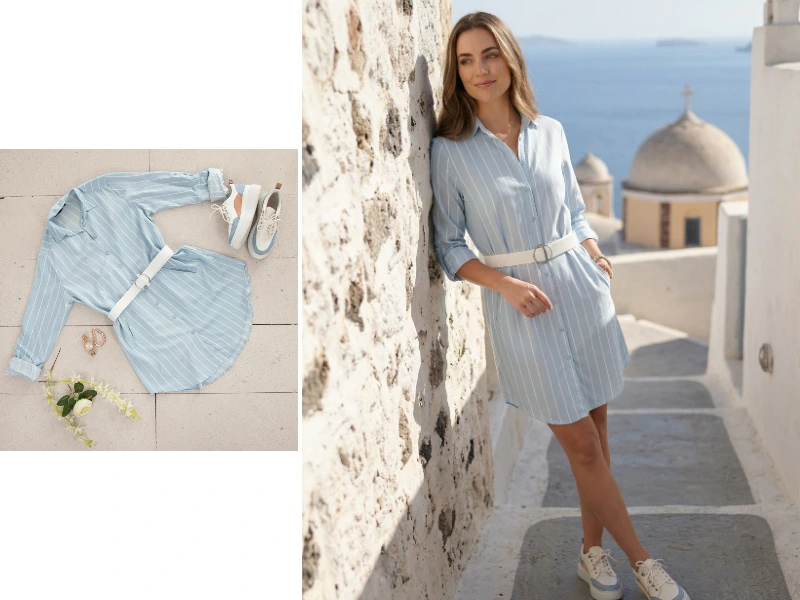
Here is the untold secret: search algorithms actively penalize “flat-lay” clothing photos (garments lying flat on a white background) and ghost mannequins in their visual shopping tabs. With platforms like Google Lens now processing over 20 billion visual searches every month, the algorithm heavily favors lifestyle imagery and real human models because they have a significantly higher click-through rate.
If your catalog is full of flat-lays, you are essentially invisible to high-intent shoppers searching by image.
The Fix: You don’t need a $5,000 photoshoot to fix this. Using the back-end AI features of the Anydress.ai plugin, you can upload your basic flat-lays and let the AI generate hyper-realistic models wearing the clothes. By updating your WooCommerce product galleries with these AI-generated lifestyle images, your products will instantly rank higher in visual search engines, driving high-converting organic traffic.
2. Gamify the Product Page to Trigger “Dopamine Browsing”
Static product pages are dead. Today’s consumers are trained by TikTok and Instagram to expect interactive, dopamine-driven experiences. If a user lands on your product page and all they can do is click “Next” on a photo carousel, they will get bored and bounce.
You need to increase your “Time-to-Visual-Match” (TVM)—the time it takes for a shopper to see a product and visualize it in their own life.
The Fix: Transform your product page into an interactive playground. By adding a front-end Virtual Try-On widget, you turn a passive browser into an active participant.
When a user clicks “Try it on,” uploads their photo, and sees themselves wearing your new summer dress via Anydress.ai, their brain receives a dopamine hit. They are no longer evaluating a piece of fabric; they are evaluating how good they look. This psychological shift routinely boosts “Add to Cart” actions by up to 45%.
3. Leverage “Zero-Waste Catalog” Marketing for Gen Z
Conversion rates aren’t just about the product; they are about brand alignment. A topic rarely discussed in WooCommerce optimization is the massive shift toward sustainable signaling.
Physical photoshoots are incredibly wasteful. They require flying models to locations, manufacturing physical sample sizes that often get thrown away, and a massive carbon footprint. In fact, the fashion industry currently accounts for roughly 10% of global carbon emissions. Modern consumers (particularly Gen Z and Millennials) are acutely aware of this and actively look for eco-friendly brands.
The Fix: Turn your AI workflow into a marketing asset. If you are using an AI photoshoot generator to create your catalog, tell your customers!
Add a badge to your product pages or a section on your “About Us” page that says:
“🌍 Zero-Waste Photography: To reduce our carbon footprint, this brand uses AI-generated models instead of flying crews around the world. We pass those savings on to you and the planet.”
This unique angle builds immense brand trust and pushes socially conscious buyers over the checkout line.
4. Cure the “Digital Wardrobing” Epidemic
“Wardrobing” is the toxic practice where a shopper buys a stylish outfit, wears it once for an Instagram or TikTok photo, and then returns it. This artificially inflates your sales but ultimately destroys your profit margins with refund fees and unsellable inventory.
Store owners often try to fight this with strict, customer-alienating return policies. But there is a better, tech-forward way to solve it.
The Fix: Give them the digital photo before they even buy.
When you offer high-quality Virtual Try-Ons (VTO), a percentage of “wardrobers” will actually use the generated image of themselves in your clothing for their social media needs—without ever buying and returning the physical item.
More importantly, for genuine buyers, seeing a flawless, photorealistic image of themselves in your garment secures their purchase intent. They know exactly what they are getting, which effectively kills the “buy three, return two” habit.
5. Hyper-Localize Your Models Without Recasting
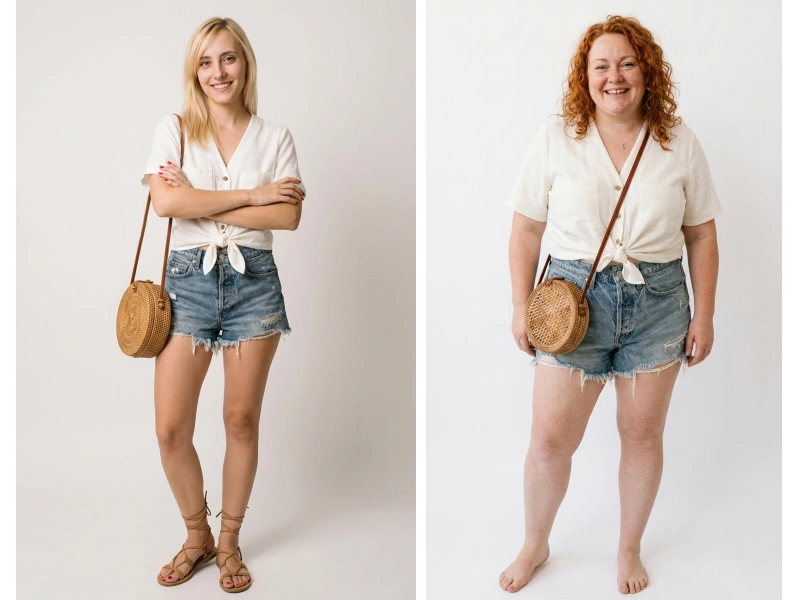
One of the biggest subconscious conversion killers is a lack of visual relatability. If your WooCommerce store traffic comes from a diverse set of demographics, but your product photography features only one specific body type or ethnicity, a large portion of your audience will subconsciously feel, “This brand isn’t for me.”
Historically, solving this meant hiring 5 different models for every single SKU—a logistical and financial nightmare.
The Fix: Dynamic, AI-driven model diversity. Inside your WordPress dashboard, you can use Anydress.ai to generate the same exact garment on multiple different AI models.
You can feature a blonde model, a plus-size model, a woman of color, and an older model all wearing the same dress in your WooCommerce image gallery. When shoppers scroll through your images and see someone who looks like them wearing the item, their purchase hesitation evaporates.
📊 The “Visual Commerce” Case Study: How Aura Apparel Scaled with AI
Let’s look at a concrete example of these advanced tactics in action. Aura Apparel, a WooCommerce store selling sustainable activewear, was struggling with a 1.2% conversion rate. Their site was fast, but their catalog consisted entirely of ghost mannequins.
The Intervention:
Instead of tweaking button colors or checkout fields, Aura Apparel focused entirely on Visual Commerce using the Anydress.ai plugin:
- AI Backend: They converted all 150 ghost-mannequin SKUs into lifestyle images featuring diverse, AI-generated models.
- Interactive Frontend: They enabled the Virtual Try-On button beneath the price tag.
- Eco-Marketing: They added a “Zero-Waste Catalog” banner explaining their use of AI imagery.
The Results (After 60 Days):
- Organic Traffic: Increased by 28% because the new lifestyle images began ranking in Google Visual Search.
- Session Duration: Jumped from 45 seconds to 2 minutes and 15 seconds (thanks to users playing with the Virtual Try-On widget).
- Conversion Rate: Skyrocketed from 1.2% to a massive 3.1%.
By abandoning outdated e-commerce advice and embracing visual AI, Aura Apparel completely transformed their bottom line.
The Future of WooCommerce is Visual
In 2026, you cannot compete using the exact same playbook as everyone else. Flat lays, generic size charts, and static pages are the past. Interactive discovery, dopamine-driven visualization, and hyper-relatable modeling are the future.
If you are ready to stop tweaking minor settings and start making massive leaps in your conversion rate, it’s time to upgrade your tech stack.
With Anydress.ai, you gain an entire virtual production studio and interactive fitting room, perfectly integrated into your WordPress dashboard.