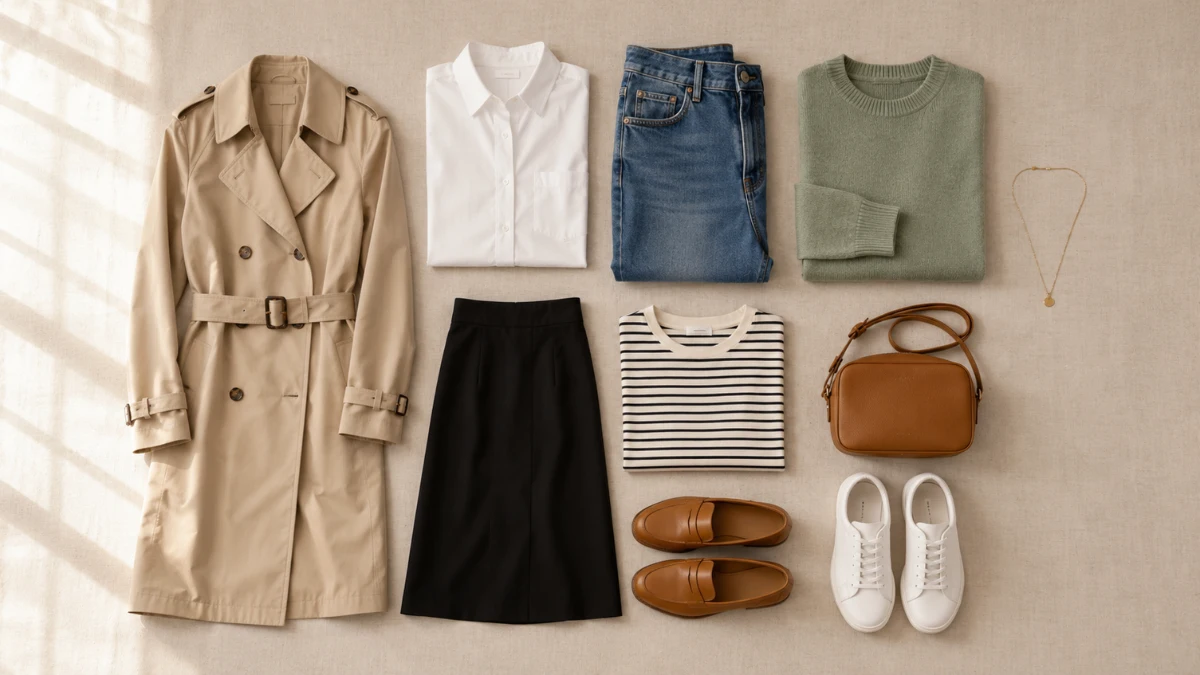
The capsule wardrobe promise is genuinely lovely: thirty pieces that all work together, a closet where everything fits and nothing is a mistake, getting dressed in ninety seconds. So you find a list — twelve essentials, or thirty, or the Amazon one everyone’s pinning — you order most of it in one enthusiastic evening, and two weeks later you’re standing in a hallway full of poly mailers, keeping four things and repackaging the rest.
The lists aren’t the problem. Every capsule list on the internet recommends roughly the same pieces, and they’re mostly right: a white button-down, straight-leg jeans, a trench, a knit, good flats. The problem is that a list can tell you what to buy but never whether that specific piece works on you — your proportions, your coloring, your actual life. That’s the guess that turns a capsule project into a returns project. Here’s how to take the guess out of it.
Step 1: Build Your List, Not Someone Else’s
Before shopping anything, spend twenty minutes on the least glamorous part: audit the life you actually live, not the one in the pin. Count your typical week — how many days are desk or laptop, how many are school runs or site visits, how many are dinners out. If your week is four casual days, one smart day and a rare event, a capsule with three blazers and one pair of jeans is a beautifully curated wardrobe for someone else.
Then look at what you already reach for. Open your closet and find the three items you wear most — not the ones you love most, the ones that are always in the wash. Those pieces are telling you your real silhouette, your real colors, your real comfort level. A capsule built around them survives contact with reality; one built around a mood board doesn’t.
Now write your list: usually somewhere between 25 and 35 pieces including shoes, weighted toward the categories your week actually demands, in a color palette of two neutrals plus one or two accents so everything mixes by default. That’s your shopping brief.
Step 2: See Each Piece on Yourself Before You Order
This is the step that changes the outcome, and until recently there was no way to do it without buying first.
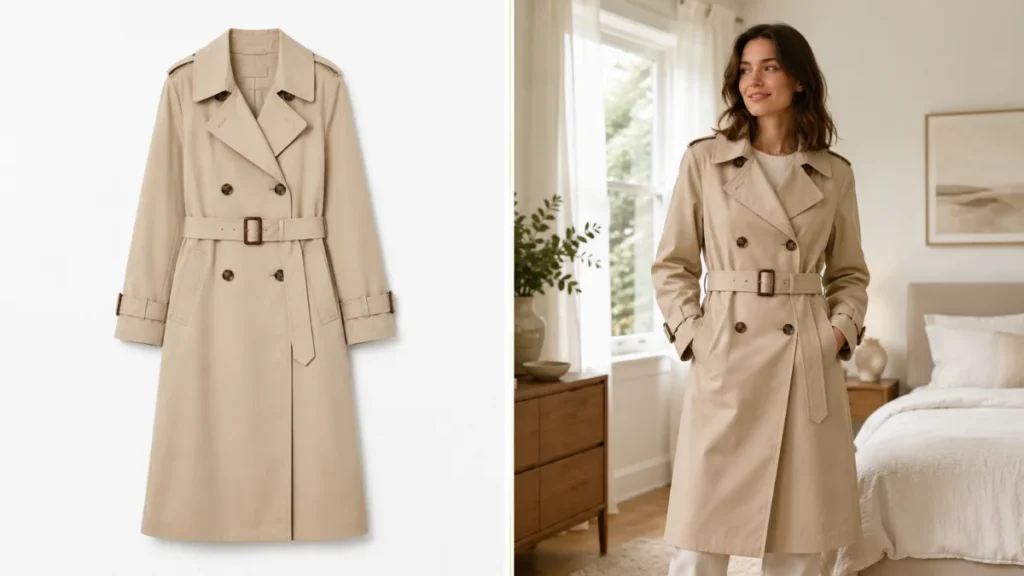
Take each candidate piece — the white shirt from one store, the jeans from another, the trench you keep going back to — and instead of adding it straight to the cart, copy the product photo and see it on your own body first. That’s exactly what AnyDress live try-on does: paste the garment photo from any store, turn on your camera, and watch yourself wearing it, live, in your own room and your own light. It works from the image, so it doesn’t matter whether the piece is from a big retailer, a small boutique, or a screenshot you saved from Instagram three weeks ago.
For capsule shopping specifically, this answers the questions the product page won’t:
- Does this shape work on my frame? The oversized shirt that looks architectural on the model can look borrowed on you — you’ll know in ten seconds instead of ten days.
- Is this actually my white? Warm ivory versus cold optic white next to your skin is the difference between a piece you wear weekly and one you avoid.
- Is the length right? Midi skirts and trench hems are the classic capsule regret — the same “midi” hits three different places on three different people.
Run every candidate through it before anything goes in a cart. The first try-on is free, and the whole point of a capsule is that these are pieces you’ll wear for years — worth sixty seconds of certainty each.
Step 3: Check They Work Together — Before You Own Them
The second failure mode of capsule building is subtler: every piece is lovely, and none of them go together. You bought a cream knit, a stone trench and an oat-coloured trouser, and now three-quarters of your wardrobe is the same beige and you own zero outfits.
Try each candidate in the same session, back to back, and screenshot the results. Line up the shots and you have a proper mood board of you wearing your actual shortlist — which makes the palette clashes and repetition obvious before you spend anything. Then do the classic capsule maths on real evidence: can each top go with at least two bottoms? Can each pair of shoes carry at least three outfits? Anything that only works one way isn’t a capsule piece, it’s an occasion piece.
If you’re on the fence between two versions of the same slot — the black or the navy, the crew or the V — download the clips and let someone else vote. Sharing a comparison of yourself in both is a lot more useful to a friend than two product links.
Step 4: Order in the Right Sequence
Once you’ve seen everything on yourself, don’t order it all at once — that’s what turns a capsule into a returns pile even when the pieces are right. Buy your anchors first: the two or three items you’ll wear most, usually a bottom, an outer layer and one great top. Live with them for a week and see how they actually behave — how the fabric wears, how the fit settles, whether that shade really is your neutral. Then order the next tier around what you’ve confirmed.
One honest boundary while you shop: a visual try-on shows you the look — shape, length, colour, whether it reads as you. It doesn’t measure you. For the fit half of the decision, check the store’s size chart against your own measurements, the same way we describe in our guide to trying on clothes online before you buy. Look from the try-on, fit from the numbers, and you’ve covered both reasons clothes get returned.
The Mistakes That Ruin Most Capsules
Buying the whole list in one order is the big one — enthusiasm is not a shopping strategy. Close behind: copying a capsule built for a different climate (a “four-season” list is useless if your winter is 18°C or your summer is 40°C), buying trend pieces as capsule pieces (a capsule is a five-year decision, and this season’s silhouette will date), forgetting shoes until the end (they dictate more outfits than any top), and building entirely in neutrals until you own a wardrobe with no joy in it. One or two accent colours you genuinely love will get worn more than the tenth beige thing.
FAQ: Capsule Wardrobes
How many pieces should a capsule wardrobe have? Most work out between 25 and 35 including shoes and outerwear, but the number matters far less than the ratio — the split between casual, work and occasion should match your actual week.
Can I build a capsule wardrobe from Amazon or fast-fashion sites? You can, and plenty of popular lists do. Just apply extra caution on fit and fabric, since sizing varies wildly between sellers — check the garment measurements rather than the label, and see each piece on yourself before ordering rather than buying three sizes to test.
How do I know if a piece will suit me before buying? Paste the product photo into a live try-on tool, turn on your camera, and see it on your own body — shape, length and colour against your skin, in your light. It’s the closest thing to a fitting room that works across every store at once.
How do I stop returning so much? Two habits: see the piece on yourself before ordering, and check the store’s measurements against your own. Wrong size and “it looked different on me” account for most clothing returns, and both are decidable before checkout.
How often should I refresh a capsule wardrobe? Seasonally at the edges, rarely at the core. Anchors — coat, jeans, boots — should last years; the swap-outs are the lighter layers and accent pieces that shift with the season.
Building your list right now? See each piece on yourself before you order — free, live, works with photos from any store.